 |
|
|
F-22 Raptor Jet Fighter Airplane Model Kits. Models, Books, DVD Movies, Videos and Aviation Art Pictures and Photos of the F-22 Raptor.
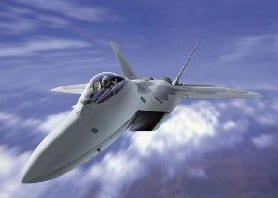
You are in the
F-22
Raptor section.
of
the Jet Fighter Model Department.
in the YellowAirplane store.
|
F-22 Raptor Jet Fighter Airplane Model Kits. Models, Books, DVD Movies, Videos and Aviation Art Pictures and Photos of the F-22 Raptor. |
||
|
|
F-22 Raptor Jet Modelo Aviones
de combate. Modelos, Libros, pelculas en DVD, Videos y Fotos de
Arte de Aviacin y fotos de los F-22 Raptor.
You are in the
|
Model Kits, Books, DVD's, Videos, and Aviation Art of the F-22 Raptor Stealth Jet Fighter Aircraft.Model Kits of the New Lockheed Martin F-22 Raptor Stealth Fighter jet. This F-22 Air Dominance, Air Superiority jet fighter is equipped with a feature called Supercruise. This is where the plane can cruise as supersonic speeds without using the fuel hungry afterburners. Supercruise will allow the F-22 to jump on its enemy very quickly and when combined with the F-22 's new generation stealth technology and avionics, the enemy will never see what has hit him. Another feature of the F-22 is that it has vectorable thrust enabling it to maintain control in even the highest angle of attacks allowing the Raptor to maneuver very quickly. Additionally, the cockpit is made of a totally new electronics technology. The F-22 is capable of working in groups with data link, radar imagery and other information to be shared between the pilots of the different aircraft in its group. This enables the Raptor Pilot to do his job of fighting while greatly minimizing the radio chatter. This aircraft has many other features, too many to mention on this page. Read a book, watch a movie and built a model and you will become a F-22 Raptor expert very quickly. Look at the F-22 Raptor Pictures on this page and see which photo looks the best. The F-22 Raptor was previously called the YF-22 until December 2005 when it entered into service with the United States Air Force as the F-22A |
 Go
to the Stores Front Door to See A Lot More. Go
to the Stores Front Door to See A Lot More. |
| Jet Fighters | WWII Fighters | WWI Fighters | Ships | Spacecraft | Tanks |
F-22 Raptor Movies F-22 Raptor Books F-22 Raptor Models
|
|
|
|
Plastic Cements Plastic Paints
iPhones, Cell Phones, Mobile Phones, GPS
|
|
|
Lockheed YF-22 1/32 Kit Detailed and complete, this plastic kit has many interior features and options for building different versions. Includes a detailed cockpit and landing gear. 26" in length when assembled. F-22 Raptor 1/72 Die Cast Model 199th TFS "The Kukaiumoku," 154th Wing, Hawaii ANG/PACAF A replica of an F-22 Raptor flown by the 199th Tactical Fighter Squadron of the 154th Wing, Hawaii Air National Guard, out of Hickam Air Force Base, Hawaii, in 2010, this 1/72 scale, die cast Hobby Master model features engraved panel lines; a fully-equipped cockpit with a canopy that opens to reveal a side-mounted fly-by-wire joystick, throttle controls, an ejection seat, printed digital display screens, and a pilot figure; removable ordnance (AIM-9 Sidewinders and AIM-120C AMRAAMs in internal bays with optional-position doors) and fuel tanks; movable stabilators and optional-position landing gear; authentic markings; and much more. 10" long; arrives ready to display on the included stand.F-22 Raptor 1/145 Scale Die Cast Model This 1/145 scale die cast model of an F-22 Raptor - the U.S. Air Force's newest stealth fighter, which formally entered service in 2005 - flown by the 1st Fighter Wing stationed at Langley Air Force Base features textured surfaces, a glazed bubble canopy, a realistic camouflage scheme with authentic squadron markings, and more. 5" long; includes a display stand.
F-22 Raptor Photo-Etched Detail Parts F-22 Raptor 1/57 Display Model
F-22
Raptor 1/48 Scale Model
YF-23 Black Widow II Advanced Fighter 1/50
Scale Display Model |
|

| ||
|
|
United States Air Force Gifts |
|
US Air Force Hats |
|
US Air Force Shirt |
|
US Air Force Sweatshirts |
| US Air Force Jacket |
|
US Air Force Windbreakers |
|
US Leather Flight Jackets |
|
US Air Force Emblems |
|
US Air Force Watches |
|
US Air Force Logo Jewerly |
| air force ring&tag=&index=sporting&linkCode=ur2&camp=17899325">US Air Force Key Rings |
|
US Air Force Ring |
|
US Air Force Patch |
| Air Force Frame&tag=&index=automotive-index&linkCode=ur2&camp=17899325">US Air Force License Plate Frames |
|
US Navy Flags |
The background photo on this page was taken on our 2002 North Pole Expedition. You can see more photos at the North Pole Photo Summary page.
| Jet Fighters | WWII Fighters | WWI Fighters | Ships | Spacecraft | Tanks |
| Watch this
closely, this aircraft literally turns upside down without moving forward,
there's no way another jet can out fight this thing, its incredible.
Unbelievable. Have you ever seen a jet able to tail slide down its own thrust?
Please Note: The F/A-22 is now operational, with two wings already flying in the Air Force. The JSF-35 'Lightning' is fast approaching operational, and can do much more than the F/A-22 - including literally stopping in mid-air from near super-sonic flight. The Su- 27 / Su-31 'Cobra' maneuver was essentially a 'one-trick pony' maneuver. The F/A-22, and especially the JSF-35, can stop and eat a Sukoyhan doing the 'Cobra' maneuver, plus do so much more. And, as pointed out by some ex-F-4 Phantom drivers, ANY of these maneuvers in an F-4 Phantom would have resulted in stall/fall/spin. Fast (super-cruise*) and stealthy, and integrated avionics are cool, but what's really impressive is the F/A-22s low speed stability and maneuverability. In the late 40s and to early 60s aeronautical engineers were going nuts on how to shape intakes to handle both subsonic and super-sonic air flows, without stagnation or compressor stalls. Supersonic in itself was a big challenge because you had to use shock waves to slow the intake air mass to sub-sonic before it hit the compressor blades, or they would stall. The engineers figured it out, but the solution was keeping a lot of air going in the front end to make sure all the hot air kept going out the back end. As you watch this Mach 2 airplane suspend motionless in air and do tail slides, be aware of the truly amazing performance of the engines and intakes. Some used to think the Su-27 / Su-31 'Cobra' maneuver was the epitome of 3rd to 4th generation fighter maneuverability. That snap maneuver doesn't hold a candle to what this two-dimensional vectored-thrust fighter with fat independent horizontal stabs can do at low speed. There must be far more tricks up its sleeve in the high subsonic dogfight speed range. The video is about 5 minutes long, but the last 30-40 seconds are less. Note also, that the RAPTOR does a complete 360 degree turn in less than 20 seconds! *Supercruise: The F/A-22 can sustain supersonic flight without the use of fuel-gulping afterburners. I.e. 1.6 m+ www.f22-raptor.com/media/video_gallery/videos/F22_AirShow_Langley.wmv
Visit
www.f22-raptor.com
to see More. Info Sent by John Bybee. From the Webmaster. I just watched a flight demonstration by the Su-30, as the sender said, that would contradict the maneuverability that is stated in this letter. That jet can really do fantastic flight maneuvers. I couldn't believe that an airplane could even hold together with what the Sukhoi could do. It was fantastic. I'm sorry that I don't have the opportunity to link to the video here. |
|
|
|
Mission
The F-22A Raptor is the Air Force's newest fighter aircraft. Its combination of stealth, Supercruise, maneuverability F-22 Raptor PTS ARF - Greye/irB000NPNU5EF-22 Raptor PTS ARF - Greye/irB000NPNU5E F-22 Raptor PTS ARF - Greye/irB000NPNU5E F-22 Raptor PTS ARF - Greye/irB000NPNU5E variability, and integrated avionics, coupled with improved supportability, represents an exponential leap in combat capabilities. The Raptor performs both air-to-air and air-to-ground missions allowing full realization of operational concepts vital to the 21st century Air Force Missions. The F-22A , a critical
component of the Global Strike Task Force, is designed to project air dominance,
rapidly and at great distances and defeat threats attempting to deny access to
our nation's Air Force, Army, Navy and Marine Corps. The F-22A cannot be matched
by any known or projected fighter aircraft. F/A-22, America 's Most Advanced
Fighter Aircraft for the 21st Century! Features
The F-22A has a significant capability to attack surface targets. In the air-to-ground configuration the aircraft can carry two 1,000-pound GBU-32 Joint Direct Attack Munitions internally and will use on-board avionics for navigation and weapons delivery support. In the future air-to-ground capability will be enhanced with the addition of an upgraded radar and up to eight small diameter bombs. The Raptor will also carry two AIM-120s and two AIM-9s in the air-to-ground configuration. Advances in low-observable technologies provide significantly improved survivability and lethality against air-to-air and surface-to-air threats. The F-22A brings stealth into the day, enabling it to not only protect itself but other assets. The F-22A engines produce more thrust than any current fighter engine. The combination of sleek aerodynamic design and increased thrust allows the F-22A to cruise at supersonic airspeeds (greater than 1.5 Mach) without using afterburner -- a characteristic known as Supercruise. Supercruise greatly expands the F-22A 's operating envelope in both speed and range over current jet fighters, which must use fuel-consuming afterburner to operate at supersonic speeds. The sophisticated F-22A aerodynamics, advanced flight controls, thrust vectoring, and high thrust-to-weight ratio provide the capability to outmaneuver all current and projected aircraft. The F-22A design has been extensively tested and refined aerodynamically during the development process. The F-22A's
characteristics provide a synergistic effect ensuring F-22A lethality against
all advanced air threats. The combination of stealth, integrated weapons systems
and Supercruise drastically shrinks surface-to-air missile engagement envelopes
and minimizes enemy capabilities to track and engage the F-22A . The combination
of reduced observability and Supercruise accentuates the advantage of surprise
in a tactical environment. |
|
Jim Walker,
US Navy Veteran in Europe and in the Pacific Fighting in both WW2 War Theaters, Fighting Criminals in Portland. A look at the life of Jim Walker. New Exhibit |
 |
Here's a great link to the F-22 Raptor with some fantastic Photos.
Read
More about the Raptor and the X-44 Manta, Multi-Axis No Tail Aircraft.
(
) ( Model Airplanes ) (
Tools)
| Corvettes for Sale
Take a look at the Yellow Airplane Historical and Technical Museum |
Please Note:
I took the photo of the clouds used in the background picture
while we were
flying from a Northern Siberian city named Khatanga
on our way to
the North Pole in April 2002.
C. Jeff Dyrek, webmaster
|
|
|
|
|
|
| . |
Click Here for North Pole Adventure Travel
Here to go to the YellowAirplane Online Museum
or
Watch this Video and
see where we're heading. or
Bible Gateway, Read
Almost any Bible, In Any Language, For Free, Great Search.
Look at these exhibits and tell me what these men really fought for.
The
2002 North Pole Exhibit
Willow Run B-24 Liberator Production Exhibit
Read he Webmasters Story, Why God Sent Me to the North Pole
Click here to see how I have to live and what it looks like to be
a disabled Vet.


|
|
Copyright Dates
9-24-2009 12-8-2010 10-27-2012 05-30-2015
| . |
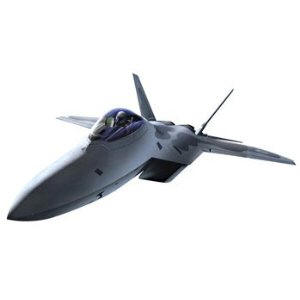 1/72 Scale F-22 RAPTOR