
|
The Sopwith Camel was perhaps the best Allied fighter of
WWI, successfully downing 1,924 aircraft in only 16 months of fighting. It
was known for being extremely agile and for having a fast rate of climb,
and perhaps most notably, the great Baron von Richthofen fell to the guns
of a 209 Squadron RAF Camel flown by Canadian Roy Brown in 1918. The aviation art section
has some great World War 1 photos and other images. Building
and owning these aircraft will give anyone a good picture of world war
1 history. Sopwith also was famous for the
Sopwith Pup and the British Sopwith Triplane.
These Sopwith model airplanes come in 1/20, 1/24, 1/32,
1/48 and 1/72 Scale Pre Built Diecast and Mahogany Display Models and Balsa Wood
and Plastic Model Kits. World War 1 Sopwith Camel Aviation Art and Gifts World War 1 Sopwith Camel Aircraft Models World War 1 Sopwith Camel Books
World War 1
Sopwith Camel Aircraft Models
World War 1 Sopwith Camel Books |
| Jet Fighters | WWII Fighters | NASCAR | Ships | Computers | Spacecraft | Tanks | Trains |
Sponsored Links
Sponsored Links
Airplane
Calendars Prices are subject to change without
notice, click on item for latest price!
Sopwith Camel, 1917
Prices are subject to change without
notice, click on item for latest price!
Look Below for More Biplane Pictures and Exhibits Sponsored Advertisement
Sponsored Advertisement
Airplane
Art
Rail
Art
Railroad
Calendars
Sopwith Camel
WW1 Aviation Art.
Aircraft Art Poster
![]()
Alfred Owles. Take to the skies of World War I with
this poster of the renowned Sopwith Camel fighter in pursuit of a German
Albatross. 16"x 12" poster.
#0007248
Price: $14.95
American Camels
Russell Smith.
![]()
Captain Elliot Springs, 16-victory WWI ace and one of
the most colorful American flyers of the war, leads the 148th Aero Squadron
on another mission in their Sopwith Camels. 17½"x 13" print is signed by the
artist.
#0070141 Price:
$24.95
![]()
This large format wall calendar features twelve
stunning air-to-air photographs that document the beginnings of military
aviation in full-color glory. You'll enjoy an S.E.5a flying right at you; a
Fokker Dr.I triplane; Sopwith's Pup, Camel and Strutter; a Bristol F2B; a
Nieuport 24; and others. You even get specifications and silhouettes of each
featured aircraft along with a chronological history of World War I aviation
events! 20"x 14".
#0080146
Price: $14.95
Aircraft Art Poster
![]()
Alfred Owles. Take to the skies of World War I with
this poster of the renowned Sopwith Camel fighter in pursuit of a German
Albatross. 16"x 12" poster.
#0007248
Price: $14.95
Stan Stokes.
Aviation Art Print
![]()
Captain R.A. Little, the RNAS' highest-scoring ace
with a total of 47 victories, achieves one of the 15 attained while flying a
Sopwith Triplane with No. 8 Squadron RNAS between April and July 1917.
16"x 11½" limited edition print is signed and numbered by the artist.
#0007180
Stan Stokes.
Aviation Art Print
![]()
Germany's legendary WWI fighters, led by the Red Baron, dance through the
skies with British Sopwith Camels in a colorful exhibit that belies their
deadly intent. 16"x 11½" limited edition print is signed and numbered by the
artist.
#0073004
Price: $39.95
James Dietz.
Aviation Art Print
![]()
Colorful Sopwith Camels of B Flight, No. 10 Squadron Royal Naval Air Service
carry out a late-war attack on Fokker D.VIIs over the Western Front. 21½"x
14¾" limited edition print is signed and numbered by the artist.
#0077050
The
Ringmaster
Art Print limited Edition
Stokes. Manfred von Richthofen, the Red Baron, is depicted in his
red Fokker triplane. In July
of 1917, Manfred von Richthofen - the Red Baron - tangles with Sopwith Camels in
the skies over Belgium.
Limited Edition. 16"x
11½" print.
....#0007554 $39.95
Russell Smith.
Aircraft Art Print
![]()
The Sopwith Camel is widely recognized as the most
successful allied fighter of the Great War. Of the men who flew them
exclusively, one name stands out above the rest - Major Donald R. MacLaren,
who achieved 54 victories, the final nine of which were scored in this
machine. 19”x 13”. #0070150
Fast and Furious
Stan Stokes.
Aviation Art Print
![]()
Sopwith Camels, each carrying 250-pound bombs, take to the
skies from HMS Furious -
the first dedicated aircraft carrier in the world - on a raid against the
German Zeppelin sheds at Tondern. Carried out on July 19, 1918, this was the
first successful bombing raid ever to be launched from a carrier. 16"x
11½" limited edition print is signed by the artist.
#0007321
Sam Lyons.
Aviation Art Print
![]()
Silhouetted against a golden sunset, a WWI Sopwith Pup prepares for landing.
This limited edition 19½"x 16" print is signed and numbered by the artist.
#0076510
Rich Thistle.
![]()
Manfred von Richthofen, the legendary Red Baron, overflies the two Sopwith
Camels that were the final victories he would ever achieve. 17½"x 12"
limited edition print is signed and numbered by the artist.
#0077200
Sopwith Camel
WW1 Gifts.
![]()
Military Aviation Screen Saver. This CD-ROM
features aviation images from WWI, WWII, the early years of the Cold War.
Includes images such as the Fokker Dr.I, Sopwith Pup, B-25, P-40, Me 262,
MiG-15 and more in 50 color and vintage B&W images. Also features an
overview of each as well as a perpetual calendar. For Windows or Macintosh.
#0006484
Price: $14.95
![]()
Man, Moment, Machine - DVD
Manfred von Richthofen, the "ace of aces," managed
80 confirmed kills over World War I Europe, peaking during the "Red April"
of 1917 when he racked up an incredible 22 victories. Then Britain's Sopwith
Triplane appeared over the horizon, and suddenly the Red Baron was put to
the ultimate test: gunsight-to-gunsight combat with a vastly superior
aircraft. Here, expert analysis, rare footage and vivid re-enactments tell
the thrilling story of what happened next. 50 minutes.
#00V9148
Price: $24.95
![]()
You might have a World War I dogfight break out on
your kitchen table when these salt and pepper shakers get passed around.
Hand painted and made of ceramic, each shaker measures 4"x 3"x 2".
Ammunition (salt and pepper) not included.
#0061113
![]()
Perfect for your lawn, garden or patio, this
rendition of the Allies' most famous World War I fighter is actually a "wind
spinner" yard sculpture whose propeller-spinner rotates in even the
slightest breeze! Made of SolarMax® UV resistant nylon with molded metal and
plastic fittings for the utmost in quality and durability, it has a 36½"
wingspan and includes a pole, a ground stake, and assembly instructions.
#0062255
Famous Aces.
Board Game
![]()
Take the controls of a Sopwith Camel, a Fokker DR.I, or any one of three
other WWI classics as you become a "knight of the air" trying to shoot down
your enemies and become an ace. This game merges card and board game
mechanics to recreate the aerial combat of WWI by simulating the abilities
of various fighter planes. For 2-4 players ages 10 and above.
#0062020
Look at
other Aircraft Board Games Here
Sopwith Camel Kite
Flying Model Kite
![]()
The legendary World War I Sopwith Camel flies again!
This kite has a 4' wingspan and authentic Royal Flying Corps markings, and
easily disassembles for storage and transport. Best of all, you can fly it in
even the slightest wind with a single line or, with two lines, you can conduct
daring aerial maneuvers just like the original!
#0006524
Sponsored Advertisement


Prints
Jet Fighters
Prop Fighters
NASCAR
Ships
Spacecraft
Tanks
Trains
World
War
1 Fighter Plane Main Index![]()
Typhoon Mosquito
Spitfire British
Fighter Jets British WWI
Aircraft British
Airways
|
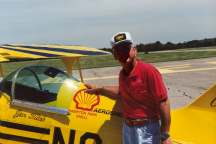
The
First Certificated Pitts |
![]() |
| Aircraft
: Sopwith Camel MANUFACTURER : Sopwith Aviation Co. Ltd. Year : 1917 Engine : 1 x "Bently"BR.1 150 hp / One 130 Clerget 9 cylinder rotary Wingspan : 8.50 m 28ft Length : 5.60 m Weight : 470 kg/695 kg 1,453 lbs Max. speed : 199 km/h 115mph Ceiling : 5650 m 19,000 ft Crew : 1 Armament : 2 x machineguns |
| Research Notes:
Sir Thomas Sopwith The Camel was perhaps the best Allied fighter of WWI, successfully downing 1,924 aircraft in only 16 months of fighting. It was known for being extremely agile and for having a fast rate of climb, and perhaps most notably, the great Baron von Richthofen fell to the guns of a 209 Squadron RAF Camel flown by Canadian Roy Brown in 1918. The Camel had great agility in combat because of the fantastic torque of its rotary engine and because the engine, pilot and guns were all located in the first seven feet of the wooden airframe. No.10 Squadron was formed in February 1917 as part of the rapid naval aviation expansion program on the Western Front. Captain Elliot Springs, 16-victory WWI ace and one of the most colorful American flyers of the war, leads the 148th Aero Squadron. British and Empire Aces of World War I, Shores. While the Allies and their adversaries raced to outdo each other in the creation of genuinely effective fighters in WWI, it was not until 1917 that the British developed a truly effective interrupter gear, paving the way for the Sopwith Camel, S.E.5 and Bristol F.2B. The 17th Aero Squadron in World War I. Reed & Roland. The 17th Aero Squadron flew Sopwith Camels under British command along the Western Front during the summer of 1918. The last of the famous Sopwith fighters to enter service during WWI, the Dolphin and the Snipe built on the strong scouting heritage of the Pup and Camel. The Dolphin, a heavily-armed, negative-staggered-wing biplane, provided the pilot with the best possible tactical view for seeking the enemy. The Snipe succeeded the Camel in August 1918 and proved its superiority over virtually all other fighters. Sopwith Camels, each carrying 250-pound bombs, take to the skies from HMS Furious - the first dedicated aircraft carrier in the world - on a raid against the German Zeppelin sheds at Tondern. Carried out on July 19, 1918, this was the first successful bombing raid ever to be launched from a carrier. The Sopwith Camel is widely recognized as the most successful allied fighter of the Great War. Of the men who flew them exclusively, one name stands out above the rest - Major Donald R. MacLaren, who achieved 54 victories, the final nine of which were scored in this machine. Captain R.A. Little, the RNAS' highest-scoring ace with a total of 47 victories, achieves one of the 15 attained while flying a Sopwith Triplane with No. 8 Squadron RNAS between April and July 1917 The Camel was the most successful fighting scout employed by either side in WWI, responsible for destroying 1,294 enemy aircraft. Requiring highly skilled pilots, many pilots were lost learning to fly the nimble aircraft. The family of Sopwith fighters served England, France and the U.S. throughout World War I, with the 1½ Strutter, the Pup, the Camel the Snipe and others becoming classics of the period. Sopwith Pup, the first proper British fighting scout that - though achieving much success after it arrived on the Western front in 1916 - saw its final combat at the end of 1917 when it ceded the skies to the even more famous and successful Sopwith Camel. |
Veterans
click here
Please Note:
I took the photo of the clouds used in the background picture
while we were
flying from a Northern Siberian city named Khatanga
on our way to
the North Pole in April 2002. C. Jeff Dyrek, webmaster
|
|
|
|
| . |
| . |

| Sign our Aviation Guestbook |
![]() |
View our Aviation Guestbook |
