 |
|
|
All about the Russian MiG-21 Jet Fighter, Model Kits, Die Cast Models, Books, DVD Videos, Software.
you are in the
Russian MiG Aircraft Section.
Russian Fighter Jets Model Department.
in the YellowAirplane store.
|
All about the Russian MiG-21 Jet Fighter, Model Kits, Die Cast Models, Books, DVD Videos, Software. |
||
|
|
you are in the Russian MiG Aircraft Section. Russian Fighter Jets Model Department. in the YellowAirplane store. |
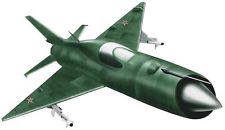
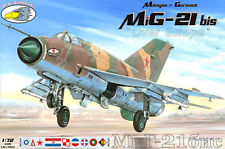
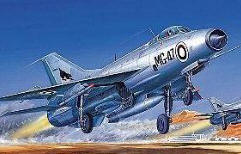
Model Kits, the MiG-21 Fishbed Russian Military Aircraft
Pictures,
|
 Fly
to the Model Airplane Department Fly
to the Model Airplane Department |
| Jet Fighters | WWII Fighters | WWI Fighters | Guitars | Ships |
| Jet Fighters | WWII Fighters | WWI Fighters | Guitars | Ships | Tanks | Motorcycles |
Here for Russian Tanks and Military Vehicles.
MiG-29
Movies * MiG-29
Books * MiG-29
Models
Russian
Prop Models * Russian
Jet Fighter Models
|
Russian MiG-21
Fishbed Model Aircraft. |
|
|
Plastic Cements Plastic Paints
MiG-21PF 1/48 Kit a MiG-21PF, an upgraded version of the MiG-21F with a larger air
intake and nose cone for the R1L "Spin-Scan" radar and equipment that enabled
all-weather operations, this 1/48 scale, plasti c kit features recessed panel
lines, a detailed cockpit with an optional-position canopy, infrared "Atoll"
air-to-air missiles and a centerline fuel tank, optional-position landing gear
and air brakes, a choice of Soviet or Indian Air Force markings, and more. 13"
long; 64 parts, skill level 2. MiG-21MF 1/72 Die Cast Model MiG-21 PF Fishbed 1/72 Die Cast Model
a delta-wing MiG-21 flown by 9-victory ace Nguyen Van Coc - probably
the top scoring ace of the Vietnam War - of the 921st Sao Do, Vietnam People's
Air Force, in 1968, this limited edition, 1/72 scale, die cast model features
engraved panel and hatch lines, a detailed cockpit with a glazed canopy, a
realistic pitot tube, wing-mounted JATO rockets, a removable gun pod, optional
position landing gear, authentic markings, and more. Measures 8" long with a 3"
wingspan and includes a display stand. Battle Damaged MiG-21 1/72 Kit a delta-wing MiG-21 "Fishbed," a Soviet-built supersonic jet fighter introduced in 1959, this unique, 1/72 scale, plastic kit can be built with or without realistic battle damage! Additional features include textured surfaces, a detailed cockpit with a glazed canopy and a pilot figure, wing-mounted armament, detailed landing gear, a choice of Soviet or Egyptian markings, and more. 8" long; skill level 2. MiG-21
MF 1/48 Scale Model Kit
Harley Davidson Motorcycles for Sale
|
|
|
Russian MiG-21 Fishbed Everything |
|
|
Russian MiG-21 Fishbed Aircraft Books.
|
Mirage III vs. MiG-21 |
Mikoyan-Gurevich MiG-21 Pilot's Flight Operating Instruction |
| MiG-21 Fishbed Walk Around Part 1. Softbound Book. Stapfer. This is a detailed look at early variants of the widely employed MiG-21 series (NATO code name Fishbed), which were very successful point defense interceptors and tactical fighters for the Soviet Union and its clients in the late 1950s and early 1960s. You get 80 pages with 40 pages of color, extensive internal and external photography of the plane and its systems, 12 color profiles and more. 11"x 8", softcover. |
|
MiG-21 Fishbed Walk Around Part 2. |
|
Warsaw Pact Air Forces. |
|
MiG-21 Units of Vietnam War.
Combat Aircraft Vol. 29. |
| Arab MiG-19 & MiG-21 Units.
Combat Aircraft Vol. 44. |
|
Russian Air Force MiG-21 Fishbed DVD Videos
|
Secret Superpower Aircraft Set 4 - DVD Documentary SetFor nearly half a century, the USSR and the U.S.
engaged in the dangerous battle for hearts, minds and power known as the Cold
War. In the name of deterrence and defense, they assembled the most advanced and
powerful militaries in history. Now, this series examines the airplanes
involved, introducing and interviewing the designers and pilots and detailing
the advances that propelled aviation into the future. 50 minutes each. |
|
Fighters Secret Superpower Aircraft - DVD Documentary |
|
Splash One. Aviation Art. Michael Newcomer. Lts. Randall Cunningham and William Driscoll of VF-96 flying their F-4 Phantom from the USS Constellation achieve the first of their five Vietnam kills - a North Vietnamese MiG-21. 15"x 12" print is signed by the artist. |
|
| MiG 21 Fishbed, 1955-2010 Planes and Pilots 12 Paloque. This lavishly illustrated book examines the widely used MiG-21 Fishbed in its many variants, showing you the famous Russian-built fighter in stunning detail. You'll view an array of color schemes and markings from the 50+ countries that have flown the Fishbed, a two-page spread of profiles of every variant, Chinese-built versions, trainers, and more. 96 pages, color photographs and illustrations, 8"x 9", softcover. |
|
|
MiG. Hardbound Book. Belyakov & Marmain. The Wests first look at this secret Russian design bureau describes every MIG version since 1941, including todays front-line models. Details the mistakes and dead ends as well as the innovations and triumphs. 496 pgs., 334 photos, 6"x9", hdbd. |
| Jet Fighters | WWII Fighters | WWI Fighters | Guitars | Ships |
| Jet Fighters | WWII Fighters | WWI Fighters | Guitars | Ships | Tanks | Motorcycles |
model kits, models, russian, mig, fighter, aircraft, jets, jet, model airplanes, models, books, videos, mig aircraft, mig airplanes
Mikoyan Gurevich MiG-21 Fishbed Gordon & Davison. The MiG-21 Fishbed, a light weight air-combat fighter, is the world's most produced aircraft since World War II, with more than 12,000 manufactured for service in 56 air forces. Here, you'll get a detailed look at its design, including all upgrades and variants; development history; systems and structures; armament; operations; and combat record. 104 pages; 250 B&W and 50 color photographs, many previously unpublished; technical diagrams; and more. 8"x 11", softcover. |
MiG-21 "Fishbed." |
|
General Designer and recognized academician, Rostislav Apollosovich Belyakov, took over the MiG Bureau in 1970 following the death of its founder, Anushavan "Artyom" Ivanovich Mikoyan (05 Aug1905-09 Dec 1970). This was made possible because of Mikhail Iosifovich Gurevich's (12. Jan 1893-12. Nov 1976) retirement in 1964. Belyakov was a graduate of the Moscow Aviation Institute during World War II. He received a State Prize for design excellence in 1951, and was chief designer of the MiG-23 during the 1960's. Belyakov ran the Mikoyan establishment with four Chief Designers, of which Mikhail Romanovich Waldenberg and Anatoly Andreevich Belosvet were the most known in the west, and fourteen deputy Chief Designers. A new Department of Foreign Economic Relations was formed under Leonid Borisovich Leshchiner and his immediate deputy, Yuri Petrovich Golovin, and chartered to work with all of the potential export customers. These names are mentioned because they show up regularly at
the major international air shows and exhibitions. The "Mikoyan OKB", was
founded in 1939 on Leningradskiy Shassi (highway) with a series of buildings and
a small factory for use in building prototypes. The OKB was at first, as the
title implies, strictly an R&D facility that built prototypes. The Mikoyan
flight test center is located at Zhukovskiy (called Ramenskoye, or abbreviated
"RAM" by western intelligence and used in the intelligence designation of new
aircraft such as "RAM-K", "RAM-J", etc.) and at Volga, on the Crimean peninsula,
and other facilities on a temporary basis. There has always been the question of
why did the US intell organizations recognize Ramenskoye as the name of the test
facility when the Russians have always addressed it as Zhukovskiy. When the
facility first opened the town of Ramenskoye was the nearest population center.
There was a worker's construction camp, named Zhukovskiy, that eventually grew
into a larger town and became the nearest population center and official Russian
name for the facility. |
Please Note:
I took the photo of the clouds used in the background picturewhile we were
flying from a Northern Siberian city named Khatanga
on our way to
the North Pole in April 2002. C. Jeff Dyrek, webmaster
Here to see the Exhibit on Arctic Russian Aircraft.
(
) ( Model Airplanes ) (
Tools)
(
)
( ) (
Fighter
Aircraft Books ) (
)
or Watch this Video and see where we're heading. or Bible Gateway, Read Almost any Bible, In Any Language, For Free, Great Search.
Look at these exhibits and tell me what these men really fought for.
the 34th fighter Squadron
USS Kitty Hawk
About the Webmaster, Why God Send Me to the North Pole
Click here to see how I have to live and what it looks like to be a disabled Vet.


Models_Fighters/D_Russian_MiG-21_Fishbed.
Copyright Dates:
12-5-2008 11-19-2010 10-04-2012
| . |