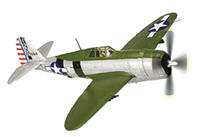
The
34th Fighter Squadron was activated at Seymour Johnson Field, N.C.,
October 15, 1944, and moved to Bluethenthal Field, NC., a month
later. The squadron served in the final stages of World War II flying
the
P-47 Thunderbolt. It saw limited
combat operations in the Western Pacific from May 1945 to August 14, 1946,
while it was stationed in the Ryukyu Islands, first on le Shima and later
Okinawa.
P-47 Thunderbolt
Models |
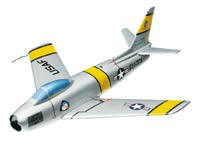
The 34th FS was inactivated October 15, 1946,
following the war and was redesignated the 34th Fighter-Day Squadron prior
to its reactivation, November 1954, at George
Air Force Base, California. It was part of the 413th Fighter-Day
Wing and was equipped with the
F-86 Sabre Jet
Models. |
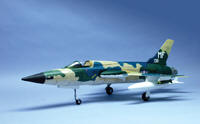
On
May 2, 1966, the 34th FS was again activated and assigned to Pacific Air
Forces. The squadron was part of the 41st Air Division, Yokota
Air Base, Japan. At this time, to the best of our knowledge the 34th flew
the
F105 Thunderchief
F-105 Thunderchief Models |
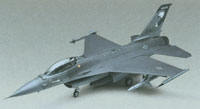
In November 1979, the 34th TFS became the
first fighter squadron to be fully equipped with the
F-16
Fighting Falcon. For the next several years, the squadron conducted
initial qualification training for pilots from around the world, including
those from Belgium, Denmark, the Netherlands, Israel and Norway. When Iraq
invaded Kuwait
August 1990, the 34th found themselves backing
up the front-line forces of the 388th TFW (Provisional) in Southwest Asia
for Operation Desert Storm. The squadron flew their desert missions
Torrejon Air Base, Spain.
After the Gulf War, the Rams got their chance
to deploy to the desert. The 34th was the first 388th Fighter
Wing squadron to deploy to Southwest Asia in support of Operation Southern
Watch.
In October 1991, the squadron was redesignated
the 34th Fighter Squadron as part of a command-level Realignment.
Since 1991, the 34th FS has deployed to Southwest Asia a total of five
times.
June 25, 1996, after being in Southwest Asia
only 10 days into their fifth trip, tragedy struck the Khobar Towers housing
compound where coalition forces lived. A terrorist bomb, which
injured more than 300 airmen, rocked the living area, killing 19 airmen.
Although some Rams were injured, none were killed in the attack. This mission
was the longest and most hostile peacetime deployment for a 388th FW squadron
In December 1998, while deployed to Al Jaber
Air Base Kuwait, in support of Operation Southern Watch, the squadron flew
23 combat missions 17-19 December, in support of Operation Desert
Fox. The squadron is equipped with the Block 40, LANTIRN-capable F-16C
and enjoys a worldwide mobility posture, which allows it to go anywhere,
anytime, in defense of freedom. Military decorations for the 34th FS include
eight Air Force Outstanding Unit awards with combat "valor" devices, the
Republic of Vietnam Gallantry Cross with Palm, 15 campaign streamers for
Southeast Asia duty and one presidential unit citation.
F-16
Fighting Falcon Models |
34th Fighter Squadron Highlights
-
November 79 First unit to become fully equipped with the
F-16
Fighting Falcon
-
November 1989 First squadron to complete conversion
to the F-16, Block 40 aircraft
-
February 1990 Deployed the F-16C for the first time
sending approximately 20 aircraft and 250 personnel to George Air Force
Base, California, for Coronet Weasel training with
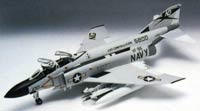
F-4
Wild Weasels
-
July 1990 First unit to fly
an F-16C LANTIRN training
-
November 1991 First unit to use the Combat Edge positive
pressure breathing system
-
December 1991 First 388th Fighter Wing unit to deploy
to King Abdul Aziz Royal Saudi Air Base, Dhahran, Saudi Arabia, in
support of Operation Southern Watch
-
July 1995 First unit in history
of Combat Archer to have all missiles hit their intended targets
-
June-October 1996 Deployed to
Southwest Asia for Operation Southern Watch which became the longest time
a wing squadron was deployed during peacetime and one of the most hostile
deployments when all members of the unit survived the bombing of Khobar
Towers
-
July 1997 Participated in first
no-notice Air Expeditionary Force (AEF) deployment concept. Deployed to
Eileson,
Alaska for participation in first ever Cope Thunder exercise.
December 1998 While supporting Operation Southern
Watch, Operation Desert Fox engaged. Squadron flew 23 combat missions in
three nights of bombing. On first bombing night 15 of 16 targets destroyed
and 100% of all bombs guided and functioned.
|

 Go back to the 34th Fighter Squadron Exhibit Index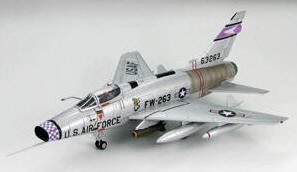
 Greetings!

